L
ading....
L
ading....
JHomes is a large-scale, role-based rental management platform designed for the Nigerian real estate market, enabling landlords, tenants, vendors, and administrators to manage property listings, digital rental contracts, payments, maintenance, and real-time communication through a secure, scalable web and mobile ecosystem.

Discover the key features and technical excellence that make this project stand out in our portfolio.
Full Stack
Clean, maintainable code following industry best practices
Cutting-edge solutions tailored to specific business needs
Rigorous testing and optimization for peak performance
JHomes digitizes the entire rental lifecycle—from property onboarding and digital contract signing to automated rent collection, maintenance handling, refund workflows, and dispute resolution—using a highly scalable, role-based architecture.
The system supports six distinct user roles (Landlord, Tenant, Vendor, Admin, Sub-Admin, Super Admin), each with isolated dashboards, permissions, and workflows enforced using JWT authentication, role-based middleware, and protected frontend routing.
The platform is actively used in production and has published mobile applications on both the App Store and Play Store, making it a fully operational commercial product rather than a demo or academic project.
Company: Betopia Group (SM Technology)
Role: Senior Frontend Engineer & Web Project Lead
Project Type: Real-World Industrial Product (Web + Mobile Apps)
Status: Live (Web, Android & iOS)
Multiple property onboarding models were implemented to support real-world rental scenarios, including public listings and private, invite-only rentals initiated by landlords or vendors using secure email invitations.
Digital contract signing workflow ensures sequential signing where tenants sign first, landlords receive automated notifications, and contracts activate only after both parties complete the process.
Email-driven contract invitations are generated dynamically, allowing targeted tenants to review property details and sign contracts securely without manual intervention.
Implemented JWT-based authentication with secure cookie handling, server-side token decoding, and role-based access control enforced at both frontend and backend levels.
Built protected routes and dashboards using Next.js App Router, middleware logic, and role-aware navigation rendering.
Developed dynamic dashboards where each user role sees only relevant features, menus, and data, driven by role mappings and centralized permission logic.
Integrated Redux Toolkit and RTK Query to manage global state, caching, API calls, and real-time UI updates efficiently.
Implemented monthly rent payments, deposit wallets, refund workflows, and payment history using secure backend APIs and third-party payment gateway integration.
Built receipt generation and PDF downloads using backend services, allowing tenants to access official payment documents at any time.
Designed a complete maintenance request system where tenants can raise issues, landlords/vendors can respond, and admins can monitor resolution status.
Implemented quit-rental request flows where either party can initiate a request and the counter-party can accept or decline, ensuring transparent exit handling.
Integrated WebSocket-based real-time messaging using Socket.IO for instant communication between landlords, tenants, vendors, and administrators.
Built a notification system for rent due alerts, upcoming payments, contract events, and maintenance updates using background jobs and event-driven logic.
Implemented a red-list management system to flag problematic users, restrict future rentals, and provide visibility across different roles to reduce operational risk.
Problem:
Designing a single platform that supports six different user roles (Landlord, Tenant, Vendor, Admin, Sub-Admin, Super-Admin), each with unique permissions, dashboards, workflows, and business rules, without creating duplicated logic or security risks.
Solution:
Implemented a centralized role-based access control (RBAC) system using JWT tokens
Protected routes on both frontend and backend using role validation middleware
Dynamically rendered sidebar menus and dashboard features based on user roles
Ensured strict permission isolation for sensitive actions like payments, refunds, and user management
This ensured scalability, security, and clean separation of responsibilities across roles.
Problem:
Managing real-world rental workflows such as listing onboarding, invite-only rentals, multi-stage contract signing, and legally sensitive rental activation while keeping the process user-friendly.
Solution:
Designed multiple onboarding flows for Listing, Existing Rental, and New Rental contracts
Implemented email-based tenant invitations with secure contract links
Built a dual-signature workflow where contracts activate only after both parties sign
Synced contract state across web and mobile platforms
This accurately reflected real Nigerian rental processes in a fully digital workflow.
Problem:
Handling recurring rent payments, refunds, wallet deposits, and transaction history while ensuring financial accuracy and user trust.
Solution:
Integrated secure payment flows for rent, deposits, and wallet top-ups
Built payment history, receipt generation, and refund tracking modules
Added backend validation to prevent duplicate or invalid payments
Implemented automated notifications for upcoming and overdue payments
This provided a transparent, reliable, and auditable financial system for all users.
Problem:
Keeping landlords, tenants, vendors, and admins synchronized in real time for messaging, maintenance requests, payment updates, and system alerts.
Solution:
Implemented WebSocket-based real-time messaging and notifications
Synced live updates with Redux state for consistent UI behavior
Added backend event validation to prevent race conditions
Ensured graceful fallbacks for unstable network conditions
This significantly improved user engagement and operational responsiveness.
Problem:
Mid-project loss of backend and mobile developers created risks in delivery timelines, system understanding, and feature consistency.
Solution:
Took ownership of understanding the full system architecture and business logic
Coordinated between frontend, backend, and mobile teams to maintain alignment
Contributed directly to backend API creation and logic when required
Acted as a technical bridge between stakeholders and development teams
This ensured uninterrupted delivery and long-term project stability.
Problem:
Managing performance and usability in a feature-heavy dashboard with dozens of modules, charts, real-time updates, and role-specific views.
Solution:
Modularized dashboard architecture using reusable components and layouts
Optimized API calls with caching, pagination, and debouncing
Introduced lazy loading and optimistic UI updates
Improved perceived performance on low-bandwidth networks
This resulted in a smooth, scalable, enterprise-grade dashboard experience.
Gained hands-on experience building and maintaining a large-scale SaaS rental platform used by real customers across web and mobile
Strengthened expertise in role-based systems, secure authentication, and authorization design
Learned how to model real-world legal and financial workflows into scalable software systems
Improved leadership skills by managing cross-team coordination and technical ownership
Deepened understanding of enterprise frontend architecture with Next.js, Redux Toolkit, and real-time systems
Developed confidence handling production-grade systems with payments, notifications, and user management
Next.js (App Router) – Server-side rendering and scalable routing
TypeScript – Type safety across a large enterprise codebase
Redux Toolkit & RTK Query – State management and API data caching
Tailwind CSS & ShadCN UI – Consistent, accessible UI components
Framer Motion – Smooth animations and transitions
Websocket – Real-time messaging and notifications
React Hook Form + Zod – Form handling and validation
Node.js & Express.js – RESTful API architecture
TypeScript – Strongly typed backend services
MongoDB & Prisma – Data modeling and database access
JWT Authentication – Secure role-based access control
BullMQ & Redis – Background jobs, notifications, and queues
WebSockets (ws) – Real-time communication
Multer & Sharp – File upload and image optimization
Nodemailer – Email notifications and invitations
Firebase Admin – Push notifications and admin services
PDFKit & Puppeteer – Receipt and document generation
Docker & PM2 – Production deployment
App Store & Play Store – Mobile app distribution
App Store Link: https://apps.apple.com/ch/app/jhomes/id6756291491?l=en-GB
Play Store Link: https://play.google.com/store/apps/details?id=com.app.jhomes
Acted as the primary frontend engineer responsible for dashboard development, API integration, and role-based access control across the web platform.
Implemented all major frontend-backend integrations while collaborating with designers and aligning UI behavior with complex business rules.
Took ownership of the project during critical phases when backend and mobile developers left, contributing to backend API development, logic building, and production debugging.
Played a key role in project continuity, technical decision-making, and cross-team communication, effectively acting as a web project lead.
Explore more projects from our portfolio
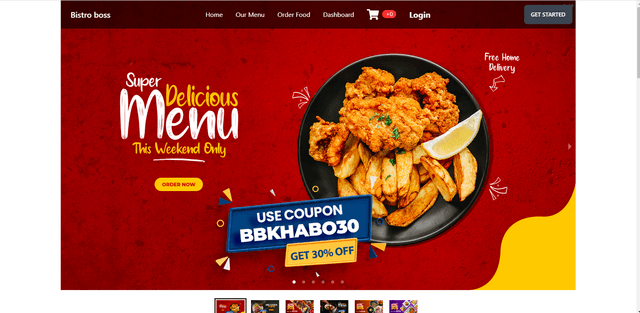
Bistro Boss is a full-stack restaurant web application that allows users to browse food items, manage a shopping cart, and place orders with secure Stripe payments, built using React, Firebase authentication, and a Node.js backend.
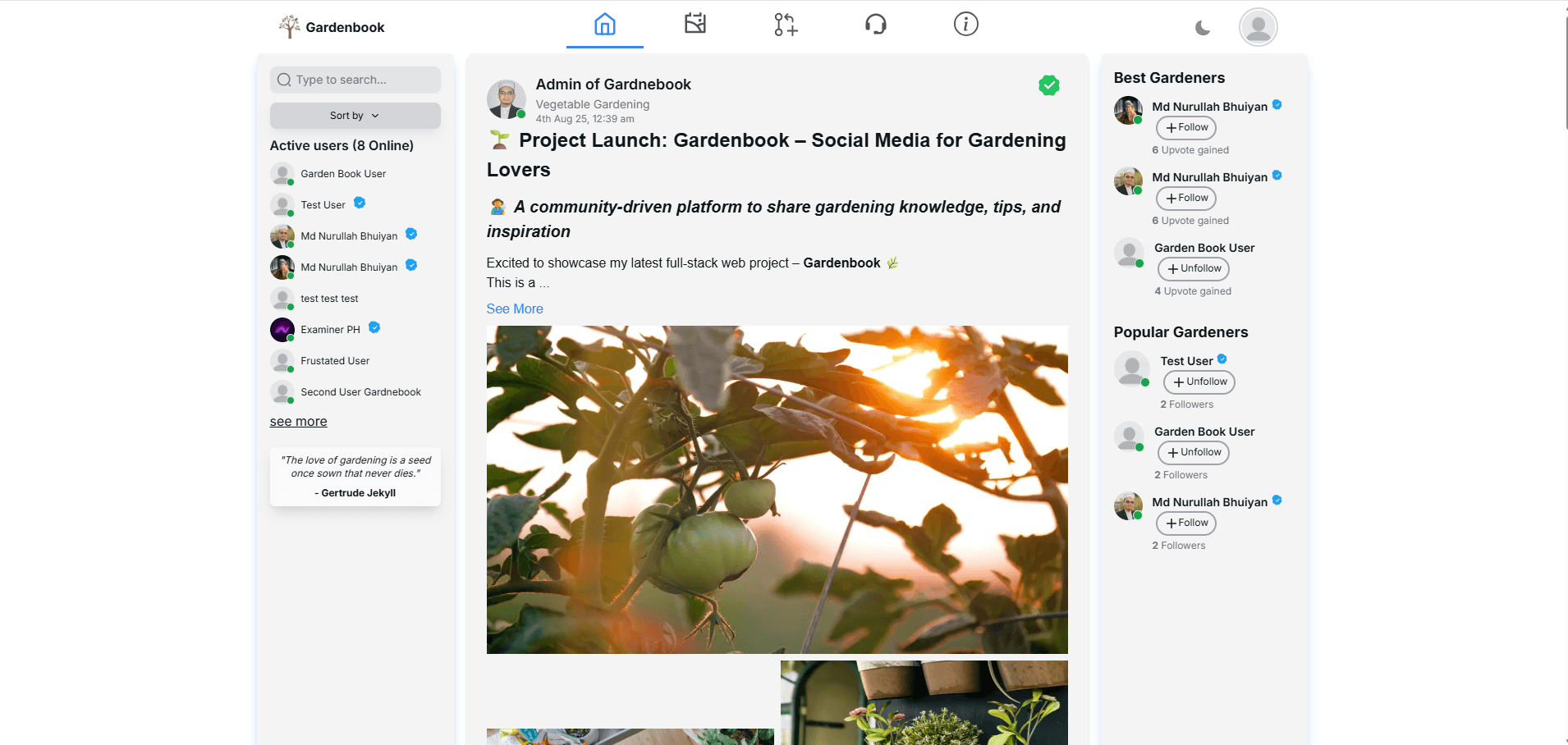
A full-stack social media platform for gardeners where users can share knowledge, interact through posts and comments, access premium content via payment, and design personalized garden plans using an interactive drag-and-drop editor.

A full-stack meeting room booking platform where users can search, filter, and book available meeting rooms for specific time slots, featuring secure JWT authentication, real-time availability validation, and AMARPAY payment integration.